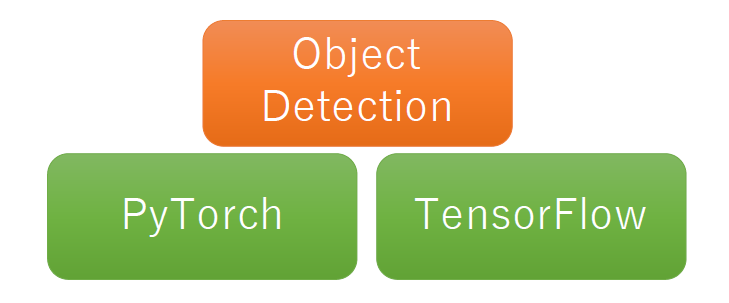
Object detection by Tensorflow Google Colab environment Part(3)

colaboratory

Introduction

Hello, this is swim-lover. Object detection is done with Python and Pytorch. I’ve just started Python, but I’m studying with the concept of “learning while using”. This time, due to the implementation sample, I ended up touching Tensorflow.

In Part (1) and Part (2), object detection was performed by using SSD. This time, I would like to perform object detection by using YoLo, which is an algorithm different from SSD.

YoLo Roughly understanding

YoLo is an abbreviation for You Only Look Once, and it seems that it is often compared with SSD.

YoLo is an end-to-end object detection because it is processed by deep learning in all stages from input to result output, along with SSD.
Let’s try to understand roughly from YoLo’s paper.

Step1)Resize the input image to 448 x 448 image.

Step2)Process Single Convolutional network to the image of step1).

Step3)Process thinnin by model’s confidence about the result of step2)

In Step2) Single Convolutional network, the processing of Multi Bounding Box (square frame) and the processing of class classification of the object are performed at the same time.

By the way, I understand that the Multi Bounding Box is the process of finding a place where an object is likely to be.

The key point is that by performing two processes at the same time, it is possible to process at a very high speed. This looks promising.

Step1)Divide the input image into SxS Grids (images). In the above example, S = 7.

Step2)For each Grid, predict B Bounding Boxes and Confirence Scores. In the upper figure in the center, there are a few thick black frames.

Step3)Create C Class Probalitity Maps. In the lower center figure, the magenta grid shows the car map, the yellow grid shows the bicycle map, and the blue grid shows the dog map.

Step4)Finally, the SxSx (B * 5 + C) tensor is output. In the paper, S = 7, B = 2, C = 20 (class number), so 7x7x30 tensors (output data) are obtained.

Yolo Architecture diagram

This is the architecture diagram in YoLo’s paper.

From the SSD paper, it is a diagram comparing SSD and YoLo.

I’d like to take some time to understand this again, but YoLo seems to have a simpler diagram.

YoLo Sample implementation

As before, we will use the Colab environment.

Mount My Drive in Google Drive in your Colab environment.

from google.colab import drive
drive.mount('/content/drive')

Create the directory ‘test_yolo_v3’ in My Drivre.

mkdir test_yolo_v3

Just in case, check the version of tensowflow. The advantage of the Cloab environment is that you can save the time of setting up the environment.

import tensorflow as tf
tf.__version__
2.8.0

Download keras version yolov3 from Git. Since the version of tensorflow is 2.0 or higher, you need to use yolov3 that supports 2.0 or higher.

!git clone https://github.com/zzh8829/yolov3-tf2

Then download the trained model.

!wget https://pjreddie.com/media/files/yolov3.weights -o ./data/yolov3.weights

Convert the trained model (yolo3.weights) to keras format.

!python convert.py --weights ./data/yolov3.weights --output ./checkpoints/yolov3.tf

However, I got an error. There is an inconsistency in the reshape process.

Traceback (most recent call last):
  File "convert.py", line 39, in <module>
    app.run(main)
  File "/usr/local/lib/python3.7/dist-packages/absl/app.py", line 312, in run
    _run_main(main, args)
  File "/usr/local/lib/python3.7/dist-packages/absl/app.py", line 258, in _run_main
    sys.exit(main(argv))
  File "convert.py", line 26, in main
    load_darknet_weights(yolo, FLAGS.weights, FLAGS.tiny)
  File "/content/drive/MyDrive/test_yolo_v3/yolov3-tf2/yolov3_tf2/utils.py", line 66, in load_darknet_weights
    conv_shape).transpose([2, 3, 1, 0])
ValueError: cannot reshape array of size 51527 into shape (128,64,3,3)

I didn’t want to spend time fixing the script, so I tried another learned file called yolov3-tiny.

!python convert.py --weights ./data/yolov3-tiny.weights --output ./checkpoints/yolov3-tiny.tf --tiny

This time it worked successfully. Now I can move forward.

I0227 05:41:37.598141 140114706884480 convert.py:24] model created
I0227 05:41:37.603230 140114706884480 utils.py:45] yolo_darknet/conv2d bn
I0227 05:41:37.606598 140114706884480 utils.py:45] yolo_darknet/conv2d_1 bn
I0227 05:41:37.609891 140114706884480 utils.py:45] yolo_darknet/conv2d_2 bn
I0227 05:41:37.614180 140114706884480 utils.py:45] yolo_darknet/conv2d_3 bn
I0227 05:41:37.620603 140114706884480 utils.py:45] yolo_darknet/conv2d_4 bn
I0227 05:41:37.627354 140114706884480 utils.py:45] yolo_darknet/conv2d_5 bn
I0227 05:41:37.642364 140114706884480 utils.py:45] yolo_darknet/conv2d_6 bn
I0227 05:41:37.696121 140114706884480 utils.py:45] yolo_conv_0/conv2d_7 bn
I0227 05:41:37.702009 140114706884480 utils.py:45] yolo_output_0/conv2d_8 bn
I0227 05:41:37.715446 140114706884480 utils.py:45] yolo_output_0/conv2d_9 bias
I0227 05:41:37.718433 140114706884480 utils.py:45] yolo_conv_1/conv2d_10 bn
I0227 05:41:37.721494 140114706884480 utils.py:45] yolo_output_1/conv2d_11 bn
I0227 05:41:37.731293 140114706884480 utils.py:45] yolo_output_1/conv2d_12 bias
I0227 05:41:37.733283 140114706884480 convert.py:27] weights loaded
I0227 05:41:39.185976 140114706884480 convert.py:31] sanity check passed
I0227 05:41:39.391645 140114706884480 convert.py:34] weights saved

YoLov3 Execution of object detection

Perform object detection using my image file.

!python3 detect.py --weights ./checkpoints/yolov3-tiny.tf --tiny --image ./data/sample.jpg

We were able to detect two bicycles with overlapping front and rear wheels. I tried the same image on a Part (2) SSD, but on the SSD it was recognized as a single bike.

Try another image. Four bicycles have been detected.

Conclusion

This time, I tried object recognition using YoLov3-tiny, which is an implementation sample of object detection (YoLo) with Tensorflow. This time, an error occurred when converting the data to keras format, and it took a long time to update. I would like to continue object recognition from the next time onwards.

Tensorflow による物体検出 YoLov3 Part(3)

colaboratory

はじめに

こんにちわ、swim-loverです。PythonとPytorchで物体検出を行っています。 Pythonを始めたばかりですが、「使いながら覚える」をコンセプトに勉強しています。今回は、実装サンプルの都合上、結果的にTensorflowに触れることになりました。

Part(1),Part(2)では、SSDを使った物体検出を行いました。今回は、SSDとは別のアルゴリズムであるYoLoを使って物体検出を行いたいと思います。

YoLo ざっくり理解

YoLoとは、You Only Look Onceの略した名称で、SSDと並び比較されることが多いようです。

YoLoは、SSDとならび、入力から結果出力までの全ステージでDeep Learningで処理する意味合いからEnd-to-Endの物体検出とのこと。

YoLoの論文からザックリ理解をしてみます。

Step1)入力画像を448 x 448の画像にリサイズする。

Step2)その画像に対して、Single Convolutional networkを行う。

Step3)Step2の結果について、Confidenceに基づいて、間引き処理を行う。

Step2)のSingle Convolutional networkでは、Multi Bounding Box(四角い枠)の処理と、物体のClass分類の処理を同時に行うようになっています。ちなみに、Multi Bounding Box(四角い枠)は何か物体がありそうな箇所を見つける処理と理解しています。

やはり、ポイントは、二つの処理を同時に行うことによって、とても速い速度で処理することができることでしょうか。これは期待できそうです。

Step1)入力画像をSxSのGrid(画像)に分割する。上の例では、S=7になります。

Step2)各Gridについて、B個のBoundingBox(四角の枠)とConfirence(コンフィデンス)Scoreを予測する。中央の上段の図には、黒い太枠が、2,3個見てています。

Step3)C個のClass Probalitity Map(クラス確率マップ)を作成する。(中央の下段の図)赤色のグリッドの箇所が車をマップ、黄色のグリッドの箇所が自転車のマップを、青色のグリッドの箇所が犬のマップを示しているものと思われます。

Step4)最後にSxSx(B*5+C)のテンソルを出力する。論文では、S=7,B=2,C=20(Class数)なので、7x7x30個のテンソル(出力データ)を得ます。

Yolo アーキテクチャ図

YoLoの論文のアーキテクチャ図になります。

SSDの論文からSSDとYoLoの比較の図になります。

これについては、また時間を作ってじっくり理解をしたいと思いますが、YoLoの方がシンプルな図になっているようです。

YoLo サンプル実装

前回まで同じく、Colab環境を使用します。

Google DriveのMy DriveをColab環境にマウントします。

from google.colab import drive
drive.mount('/content/drive')

MyDrivreにディレクトリ’test_yolo_v3’を作成します。

mkdir test_yolo_v3

念の為、tensowflowの versionも確認しておきます。Cloab環境だと環境セットアップの手間が省けるのがメリットです。

import tensorflow as tf
tf.__version__
2.8.0

Gitよりkeras版yolov3をダウンロードします。tensorflowのVersionが2.0以上なので、2.0以上に対応したyolov3を使用する必要があります。

!git clone https://github.com/zzh8829/yolov3-tf2

続いて、学習済みモデルをダウンロードします。

!wget https://pjreddie.com/media/files/yolov3.weights -o ./data/yolov3.weights

学習済みモデル(yolov3.weights)をkeras形式に変換します。

!python convert.py --weights ./data/yolov3.weights --output ./checkpoints/yolov3.tf

しかしながら、エラーが出てきました。reshape処理のところで不整合が生じています。

Traceback (most recent call last):
  File "convert.py", line 39, in <module>
    app.run(main)
  File "/usr/local/lib/python3.7/dist-packages/absl/app.py", line 312, in run
    _run_main(main, args)
  File "/usr/local/lib/python3.7/dist-packages/absl/app.py", line 258, in _run_main
    sys.exit(main(argv))
  File "convert.py", line 26, in main
    load_darknet_weights(yolo, FLAGS.weights, FLAGS.tiny)
  File "/content/drive/MyDrive/test_yolo_v3/yolov3-tf2/yolov3_tf2/utils.py", line 66, in load_darknet_weights
    conv_shape).transpose([2, 3, 1, 0])
ValueError: cannot reshape array of size 51527 into shape (128,64,3,3)

いろいろ調べてみましたが、スクリプト修正に時間をかけたくなかったので、yolov3-tinyという別の学習済みファイルを試してみました。

!python convert.py --weights ./data/yolov3-tiny.weights --output ./checkpoints/yolov3-tiny.tf --tiny

今度はうまくいきました。これで前に進めます。

I0227 05:41:37.598141 140114706884480 convert.py:24] model created
I0227 05:41:37.603230 140114706884480 utils.py:45] yolo_darknet/conv2d bn
I0227 05:41:37.606598 140114706884480 utils.py:45] yolo_darknet/conv2d_1 bn
I0227 05:41:37.609891 140114706884480 utils.py:45] yolo_darknet/conv2d_2 bn
I0227 05:41:37.614180 140114706884480 utils.py:45] yolo_darknet/conv2d_3 bn
I0227 05:41:37.620603 140114706884480 utils.py:45] yolo_darknet/conv2d_4 bn
I0227 05:41:37.627354 140114706884480 utils.py:45] yolo_darknet/conv2d_5 bn
I0227 05:41:37.642364 140114706884480 utils.py:45] yolo_darknet/conv2d_6 bn
I0227 05:41:37.696121 140114706884480 utils.py:45] yolo_conv_0/conv2d_7 bn
I0227 05:41:37.702009 140114706884480 utils.py:45] yolo_output_0/conv2d_8 bn
I0227 05:41:37.715446 140114706884480 utils.py:45] yolo_output_0/conv2d_9 bias
I0227 05:41:37.718433 140114706884480 utils.py:45] yolo_conv_1/conv2d_10 bn
I0227 05:41:37.721494 140114706884480 utils.py:45] yolo_output_1/conv2d_11 bn
I0227 05:41:37.731293 140114706884480 utils.py:45] yolo_output_1/conv2d_12 bias
I0227 05:41:37.733283 140114706884480 convert.py:27] weights loaded
I0227 05:41:39.185976 140114706884480 convert.py:31] sanity check passed
I0227 05:41:39.391645 140114706884480 convert.py:34] weights saved

YoLov3 物体検出の実行

自前の画像ファイルを使って、物体検出を実行します。

!python3 detect.py --weights ./checkpoints/yolov3-tiny.tf --tiny --image ./data/sample.jpg

前輪と後輪が重なっている2台の自転車を検出できました。同じ画像をPart(2) SSDでも試しましたが、SSDの場合は、1台の自転車として認識されていました。

別の画像でも試してみます。4台の自転車が検出できています。

まとめ

今回、Tensorflowで物体検出(YoLo)の実装サンプルであるYoLov3-tinyを使って、物体認識を行ってみました。今回、keras形式へのデータ変換でエラーが発生し、更新に時間がかかりました。次回以降も物体認識をしてみたいと思います。
コメント

タイトルとURLをコピーしました